Sustainable transport: the voice of our experts
Transport logistics play a key role in responding to customer needs. But this activity also emits CO2. As part of the Group’s quest for carbon neutrality, the various industries are investing in green transport fleets.
What are the main levers that the Vicat group is using to accelerate the decarbonization of its transport fleets?
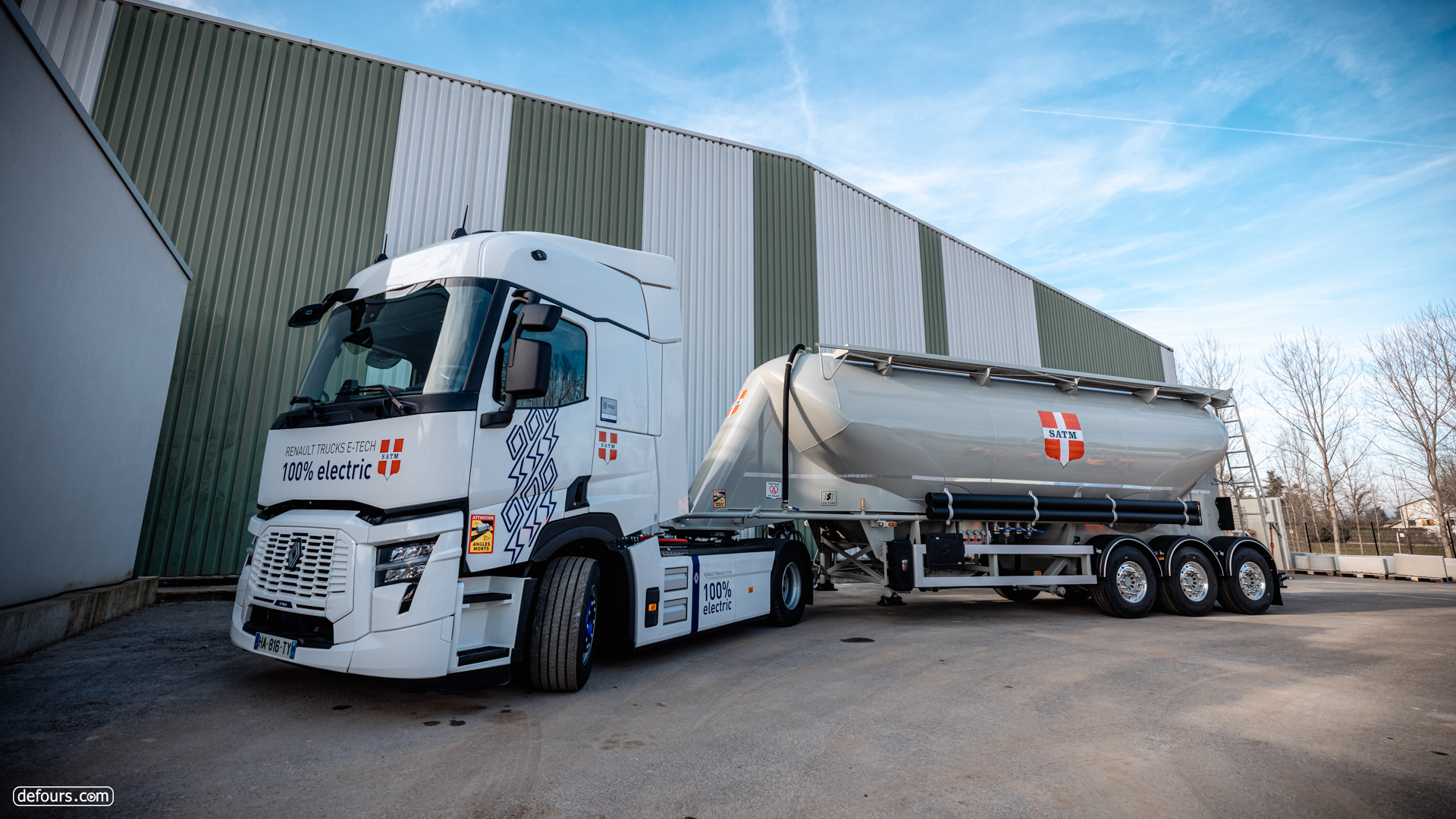
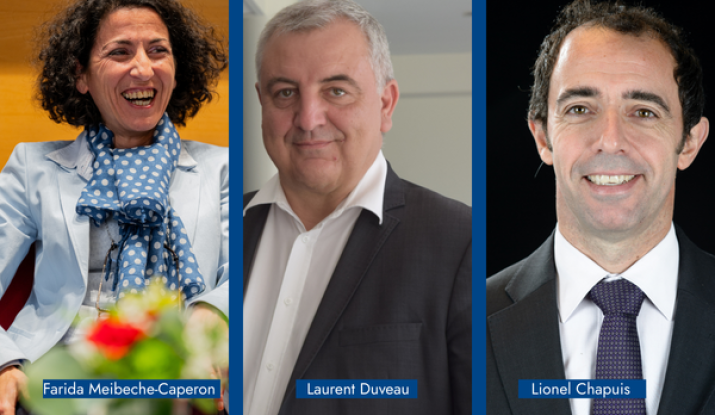
Farida Maibeche-Caperon, Director of the Services Division France: «Decarbonizing our heavy mobilities is a strategic priority for the Vicat Group, and all of our fleets are concerned. Our action is based on three main lines. Firstly, optimizing the loading rate, using better flow and return outings management to reduce empty load journeys and improve our logistics efficiency. Next, our fleets are going green, with the use of alternative motor means, like biofuel and electrification, with a view to a sustainable energy transition. Finally, the modal shift towards solutions like rail and water, whenever this is possible. This final line depends a great deal on infrastructure and the available operators. We are actively working towards mass flows to make these alternatives viable and sustainable. Like an athlete working towards the Olympic Games, it is difficult to make progress without markers: without a stopwatch, there is no performance. We are implementing precise measurement tools and monitoring metrics to assess our progress and adjust our actions in real time. The environmental performance is part of an overall rigorous system of oversight.»
How does the decarbonization of transport constitute a key lever for the Group's climate commitment?
Laurent Duveau, Group Environmental Performance Director: «Transport of raw materials and goods required for our business, as well as distribution of products to our customers represents over 6% of the Group’s greenhouse gas emissions. In the countries in which we are established, a few practical, targeted actions, adapted to local contexts, are being conducted with the goal of reducing the carbon emissions of our logistics.»
What alternatives to diesel has the Group put in place?
Lionel Chapuis, Group Energy and Raw Materials Director: « For several years, we have been working to reduce the carbon in our logistics transport and make it more efficient, thanks to a variety of different initiatives that can replace, when possible, trucks with rail or river transport. In France, for example, on the Mediterranean-Lyon line, we are developing barge deliveries with capacity of 2,000 to 5,000 metric tons, between Fos-sur-Mer and our cement plants in Montalieu and Saint-Égrève. We are also favoring deliveries on the Rhine and Moselle rivers to bring fuel and slag to the Xeuilley plant. Rail transport is used in India, Kazakhstan, the United States, Switzerland and France. For 4 years now, there has been a rail link between the Saint-Jean-de-Maurienne station in Haute-Savoie and the Créchy plant in the Allier department, mostly bringing gypsum. However, it is not possible for us to totally eliminate trucks due to distances and the access routes to certain geographical areas. We are finding alternatives to diesel to reduce our CO2 and dust emissions. Among them is B100 in France, fuel that is 100% made from French canola, the electrification of vehicle fleets and the use of biofuels in Switzerland, and in the United States where the cement mixer fleet is progressively moving to biogas. On the other hand, in Europe at the moment, natural gas has not been a competitive solution since the outbreak of the war in Ukraine. »