Modernizing facilities to improve energy efficiency, using alternative fuels to replace fossil fuels, reducing the clinker content in cement, and capturing residual CO₂ emissions are the four key levers for decarbonization and innovation implemented across all our plants. In 2023, the Group reaffirmed its climate targets with a clear ambition: to contribute to carbon neutrality of the entire value chain, for 2050.
Reduce the Group's emissions to 497 kgCO₂net/t cement eq. (430 kg CO₂ net/t cement eq.for the Europe Region).
Key levers and major actions by 2030

40%
Reduce electricity-related emissions by 40%
50%
Reach 50% of alternative fuels at the Group level and almost 100% within the Europe zone

69%
Reduce the clinker content of cement to 69%

2
Initiate two CCU/CCS (carbon capture usage/ storage) projects by 2030
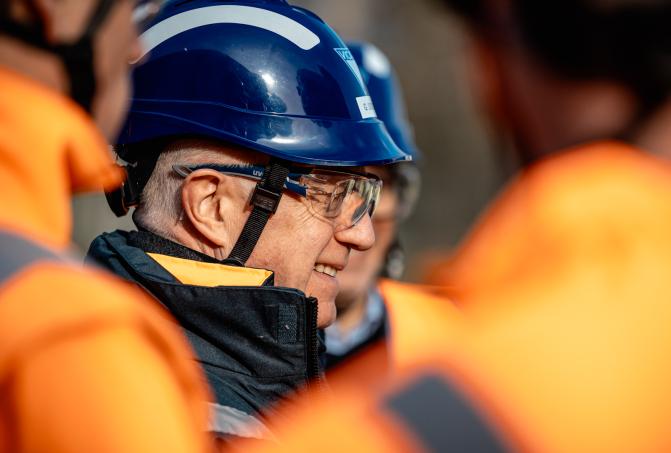
The word of the Group’s Chairman and CEO
“The carbon footprint of our products and services is improving year on year, in line with our roadmap and the climate policies of each of the countries in which we operate. In France, the country of the Group’s historical roots, we are pursuing a particularly ambitious trajectory. It is based on major industrial investments, acceleration of our low-carbon innovations and close collaboration with local regions, sectors and public partners.
This dynamic takes shape in large-scale projects that fundamentally transform our processes, energies and products. Our teams everywhere are advancing with determination. This reflects our long-standing vocation and sincere intention to build a sustainable and resilient living environment.”
Our decarbonization ambition for 2050
Toward carbon net zero across our value chain
Vicat has set a clear decarbonization trajectory for its cement business – to achieve net zero carbon emissions throughout the value chain in line with the Paris Agreements.
This trajectory relies on our 140 engineers and technicians and our 10,000 employees worldwide who are developing tomorrow’s solutions, which range from the launch of subsidiaries specialising in the circular economy and highly advanced CO2 capture technologies to 3D concrete printing.
A 170-year legacy
titre
30 years’ experience in decarbonization
As a company firmly rooted in the regions it serves, Vicat develops a circular economy model that benefits everyone, innovating daily to reduce the environmental impact of construction.
For several years, the Group has heavily invested in decarbonization, not out of obligation, but out of conviction in a bid to meet its clients’ expectations and build a sustainable future for the generations to come.
Our four decarbonization levers
Process energy efficiency
Incremental improvements in kiln thermal performance and mill electrical performance in the cement plants are essential daily levers for the Vicat teams. In regions where cement demand is on the rise, we are seeing capacity increases with latest-generation, less energy-intensive production tools.
In Montalieu, France, more than 30 years ago the Group invested in a precalciner kiln system and more recently two vertical mills to reduce thermal and electric energy consumption.
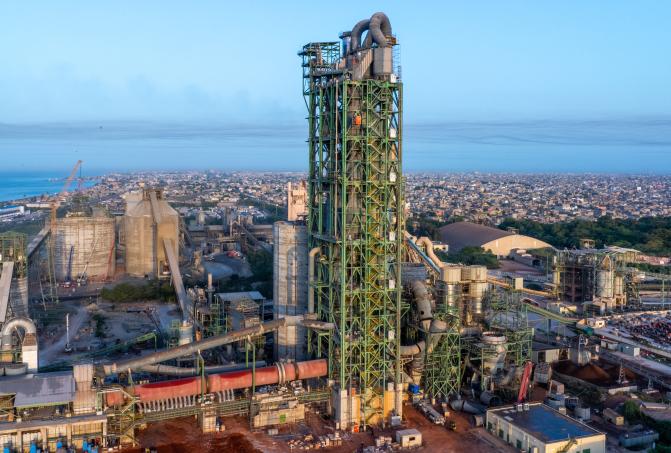
In Senegal, during the initial design stage the best available technology is being integrated into our new “Kiln 6” line in Rufisque. This investment meets cement demand, which has been on a constant rise in Senegal for 20 years. Kiln 6 alone offers a capacity equivalent to 10,000 metric tons of cement/day. It is among West Africa and the Group’s most modern equipment.
Using alternative fuels
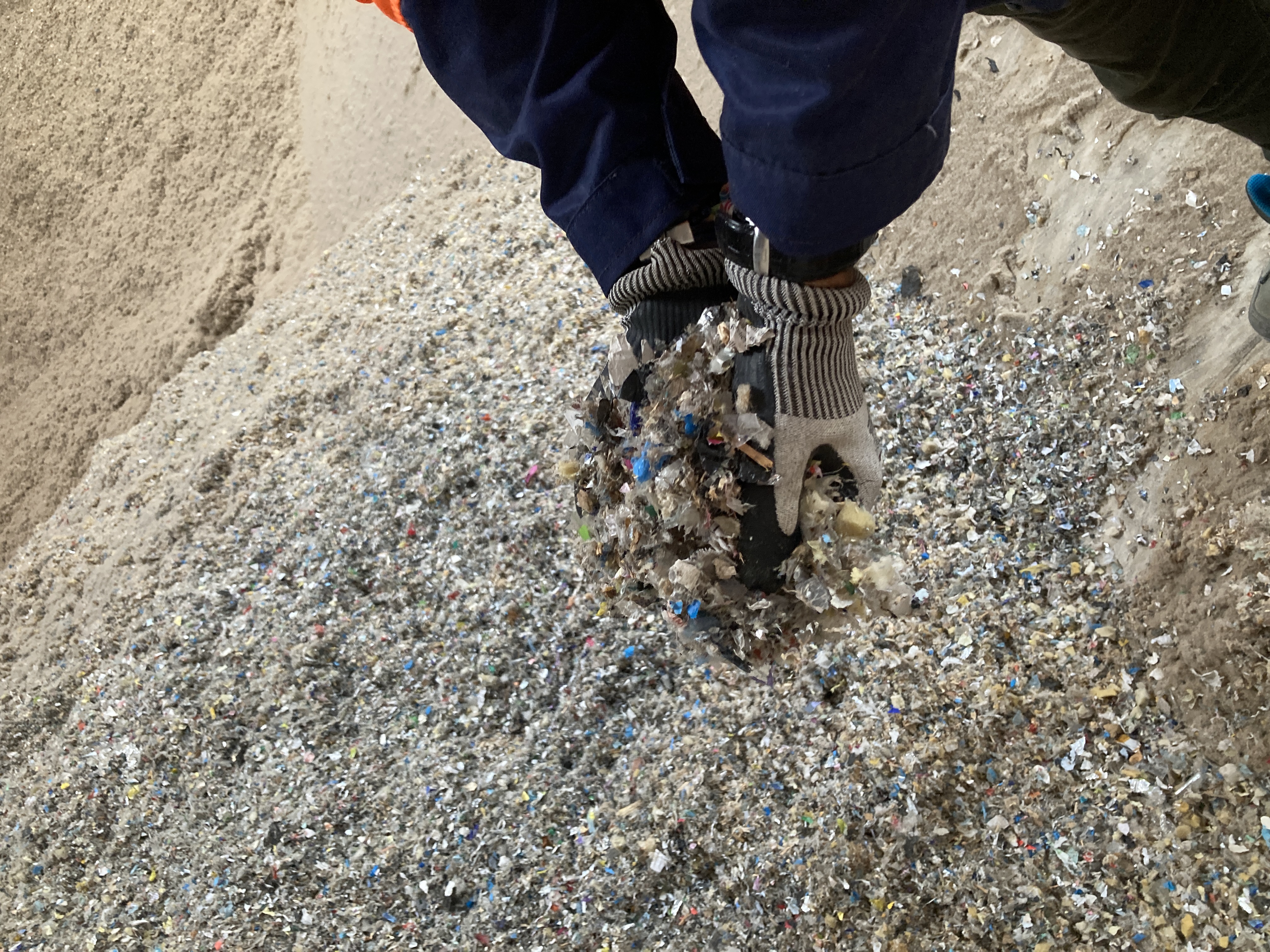
Energy and material recovery are a strong lever for both decarbonization and economic performance. Among others, alternative fuels include solid recovered fuel (SRF), tyres, solvents, oils, shredded wood and impregnated sawdust. These fuels are replacing fossil fuel such as coal.
Our facilities also recover materials with no energy value such as industrial sludge, ash and excavated soil. These alternative materials are then used as a substitute for the raw materials from our quarries or ores.
Our commitment is supported by the launch of dedicated subsidiaries such as CIRCULère in France, Altola in Switzerland, and Çözüm in Turkey. These subsidiaries collect, treat and recover local waste, transforming environmental constraints into economic opportunities for local regions (added value, jobs, soil decontamination, etc.) and into a decarbonizationlever for our productions as part of a virtuous circular economy model.
In 2025, the use of alternative fuels prevented the incineration or landfilling of 1.7 million metric tons of waste and emissions of more than 2.5 million metric tons of CO2 (gross). And some of our sites such as Xeuilley in France and Reuchenette in Switzerland substitute virtually all their fossil fuels (with a substitution rate > 96%).
In the USA, our National Cement teams increased the proportion of alternative fuels from 30% to 60% between 2023 and 2025. This was possible with the commissioning of the new kiln in Ragland, and the commitment of the teams in our two cement plants.
In France, the Créchy and Montalieu cement plants use more than 10% of alternative materials for clinker production.
Reducing clinker content in our cement
Concrete, produced from aggregate and cement (glue binding the aggregate particles together), is the most important material for building housing and infrastructure. But clinker, the main and essential component of cement, is responsible for a significant proportion of CO₂ emissions.
Optimising clinker content in cement through partial substitution is an effective decarbonization option and one that also preserves or improves the performance and implementation qualities of concrete.
This is based on greater use of substitution materials such as activated clay.
In Brazil, for example, our teams offer the market cement with 58.7% clinker on average, limiting its carbon footprint to 468 kg CO2/metric ton, which is already below the Group’s mean target for 2030.
ARGILOR: manufacturing cement with a reduced carbon footprint
This large-scale decarbonization project, operational since 2025, was selected by the first Recovery Plan funded by the French government and operated by ADEME. It leverages an innovative process using the properties of clay, a locally produced natural resource, to replace a proportion of the clinker with thermally activated clay and produce cement with low carbon content but comparable performance.
CARAT: the binder that stores biogenic carbon
Our Carat binder, produced in the Montalieu cement plant, reduces the carbon footprint per m3 of manufactured concrete by almost 90% to 20 kg CO2/m3*. It has lower clinker content and is supplemented with biochar, a biosourced substance generated from the pyrolysis of French forest residues and recognised as a sustainable carbon storage solution. Carat was chosen for the Paris 2024 Games Olympic Village, the regional headquarters of Léon Grosse in Bron and will soon be used for the new Builders engineering school campus in the Lyon area.
*: according to NF EN 15804+A1/CN
PROGRESSO: concrete with less than 100 kg of CO2/m3
Vigier CEM Progresso, a low environmental impact product manufactured in Switzerland, is revolutionising concrete construction. Made mainly of local recycled materials or co-products from other industries, this cement significantly reduces CO2 emissions without compromising on performance. Compatible with recycled concrete mixes (ECOVISION), Vigier CEM Progresso combines versatility and ecology, reinforcing its role in achieving climate targets and transitioning to sustainable construction practices.
>> Learn more about the decline in the clinker factor within the Group
Initiating major CCU/CCS projects
Carbon capture and storage is a key technological breakthrough. Here is a recap of our flagship CO2 capture projects:
In the Group's climate roadmap, Vicat confirms its ambition to lead the development of a major decarbonization project with the capture and storage of residual emissions.
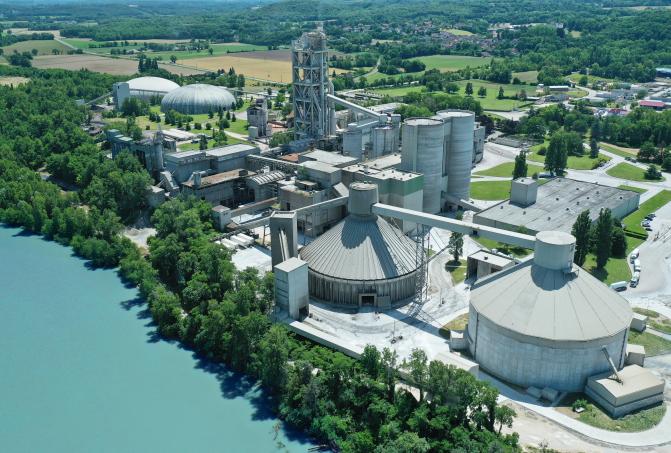
VAIA as a driving force for decarbonization in the Rhône Valley corridor.
The VAIA (Vicat Advanced Industrial Alliance) project involves the capture of 1.2 million metric tons of CO₂ annually, representing almost 100% of the cement plant’s emissions, in addition to the decarbonization levers already implemented by Vicat (clinker content reduction, fossil fuel substitution and energy efficiency). These 1.2 million metric tons of CO2 amount to the equivalent of taking 75,000 traditional cars off the road for one year. The captured CO₂ will be transported via an existing pipeline, converted to a CO₂ pipeline as far as Fos-sur-Mer. The gas will then be liquefied to facilitate shipping to the geological storage site.
VAIA helps meet European and national greenhouse gas emission and industrial decarbonization targets
VAIA helps maintain industry and job dynamics in local regions, making use of the existing infrastructure
- VAIA combines the know-how and expertise of French stakeholders (VICAT, SPSE, ELENGIE, RTE, etc.) in a key strategic area
To go further
An example of a low-carbon cement plant project
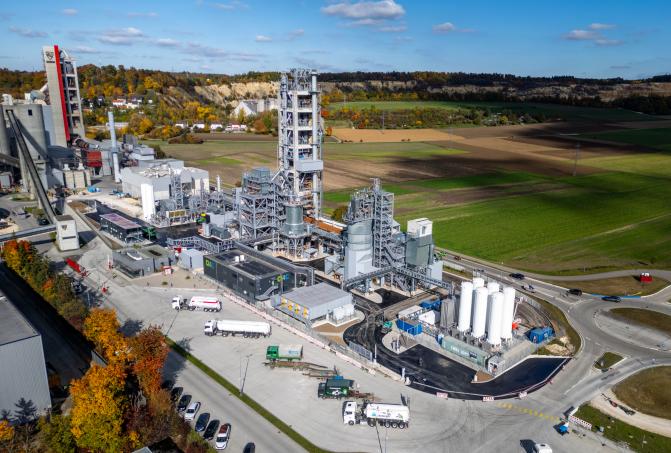
The CI4C – Cement Innovation for Climate – project embodies the ambition shared by Vicat and its European partners to fundamentally change the cement industry. With the construction of a "semi-industrial" pilot facility at the Mergelstetten site in Germany, we are developing a groundbreaking technology – the Pure Oxyfuel process – which replaces ambient air with pure oxygen in the kiln. This innovation reduces the amount of gas at facility output and increases the concentration of CO2, making almost complete capture both simpler and more efficient.
Thanks to this breakthrough, the captured CO2 can be recovered or stored, paving the way to new more sustainable industrial models. Alongside Dyckerhoff (Buzzi's German subsidiary), Heidelberg Materials and Schwenk, Vicat is fully committed to this demonstrator that is unique to Europe and designed to prepare for widespread carbon capture in our sector.
With CI4C, we affirm our ambition to actively contribute to the energy transition and build a low-carbon cement plant that is efficient and resolutely future-oriented.

FAQ
The cement industry accounts for around 8% of global CO2 emissions. Clinker production generates CO2 during limestone firing. Owing to the climate emergency and regulations on carbon neutrality (Paris Agreements, European Green Deal), decarbonisation is an absolute necessity for our sector and our responsibility to future generations.
All our cements are 100% compliant with the applicable standards (NF EN standards). Our engineers and technicians rigorously test each formula in the lab and on pilot sites. The fact that Carat was used for the 2024 Paris Olympics and ECOVISION in Switzerland on demanding sites is proof of its reliability. Our low-carbon products are not a compromise – they are innovations that often exceed the performance of traditional cements.
Our investments in decarbonization represent a significant portion of our annual industrial investments. These investments are essential to ensure our future competitiveness, meet regulatory expectations, and remain true to our values.
C’est l’ensemble des actions visant à réduire les émissions de CO₂ de la fabrication du ciment. Ces émissions proviennent surtout du clinker : la cuisson du calcaire à environ 1 450 °C libère du CO₂, à la fois par l’énergie consommée et par la décarbonatation du calcaire. Décarboner consiste donc à agir sur l’énergie, sur la part de clinker et sur les émissions résiduelles.
Vicat actionne quatre leviers complémentaires : l’efficacité énergétique des procédés, l’utilisation de combustibles alternatifs en remplacement des combustibles fossiles, la réduction du taux de clinker dans le ciment, et le captage du CO₂ (CCU/CCS). Chacun fait l’objet d’une page dédiée.
D’ici 2030, le Groupe vise 50 % de combustibles de substitution (près de 100 % en zone Europe), un taux de clinker ramené à 69 %, une réduction de 40 % des émissions liées à l’électricité consommée, et le lancement de deux projets de captage du carbone (dont VAIA en France). L’ensemble s’inscrit dans l’ambition de neutralité carbone sur la chaîne de valeur en 2050.
Discover our decarbonization brochure