Qu’est-ce que le clinker et quel est son rôle dans le ciment ?
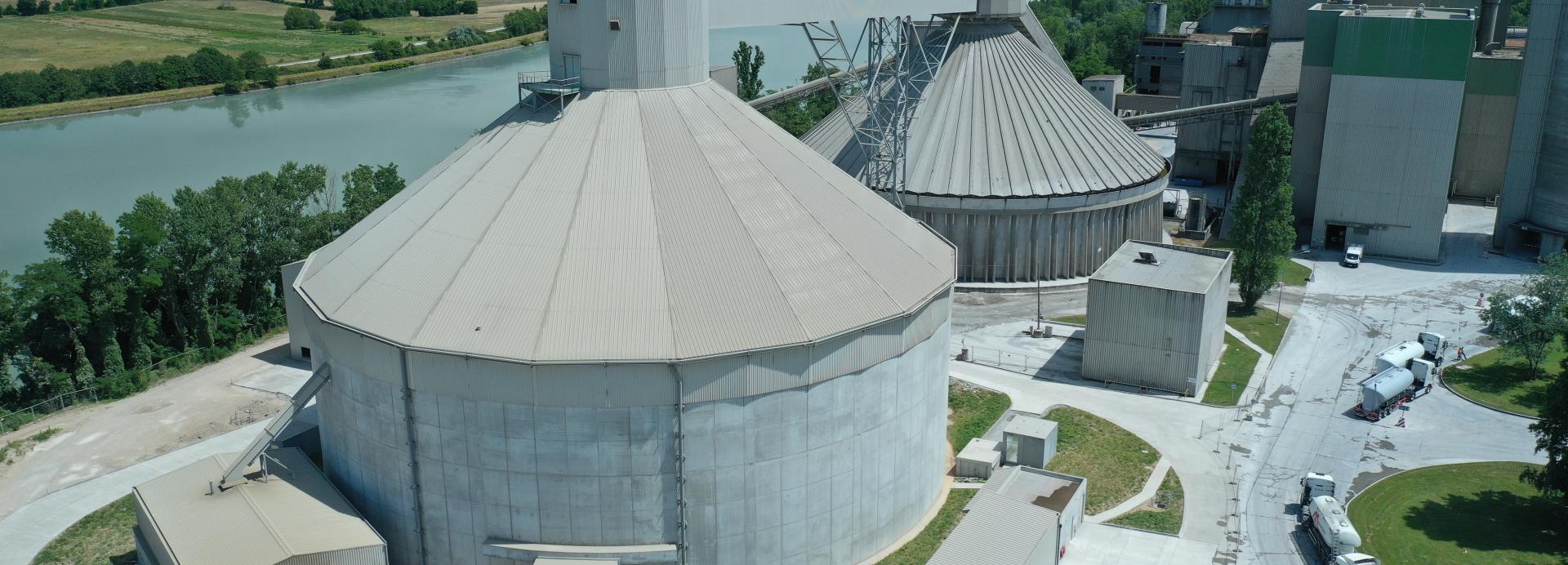
Le clinker est le constituant de base du ciment : un matériau obtenu en cuisant un mélange de calcaire et d’argile à environ 1 450 °C dans un four de cimenterie. Broyé puis mélangé à d’autres composants, il donne le ciment, le liant qui assure la prise et la résistance du béton.
C’est aussi le principal responsable de l’empreinte carbone du ciment : sa fabrication émet du CO₂, à la fois par l’énergie de cuisson et par la décarbonatation du calcaire. Réduire la part de clinker dans le ciment, ce que l’on appelle le facteur clinker, est donc l’un des leviers les plus directs de décarbonation, aux côtés des combustibles alternatifs et de l’efficacité énergétique.
The reduction in the proportion of clinker in cements is picking up speed. Why? Because the higher the clinker content of a cement, the greater its carbon footprint. Our Group's 2030 roadmap sets out clear decarbonization targets; we are aiming for a clinker content in cement of 69%. To do this, substitute materials exist – known as Supplementary Cementitious Materials (SCMs), which can match or even exceed the mechanical performance of cement and the durability of structures.
What are these SCMs that offer tangible solutions for decarbonizing cement?
What criteria guide the choice of one cement additive over another at Vicat?
And how far will innovation go to produce low-carbon cements?
Low-carbon cements: solutions in action to reduce the clinker factor
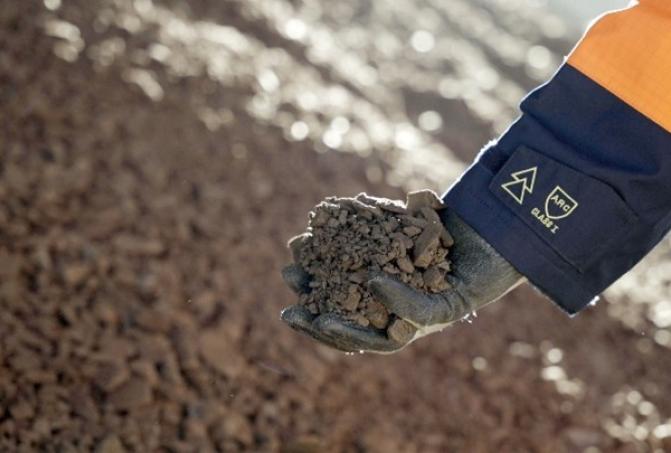
To partially substitute the clinker content in cements, the Group uses alternative materials. To do this, the Group relies on a wide range of additives, such as limestone filler, natural pozzolan, materials from demolition sites and activated clays, the latter being increasingly used within our Group.
The expert's view
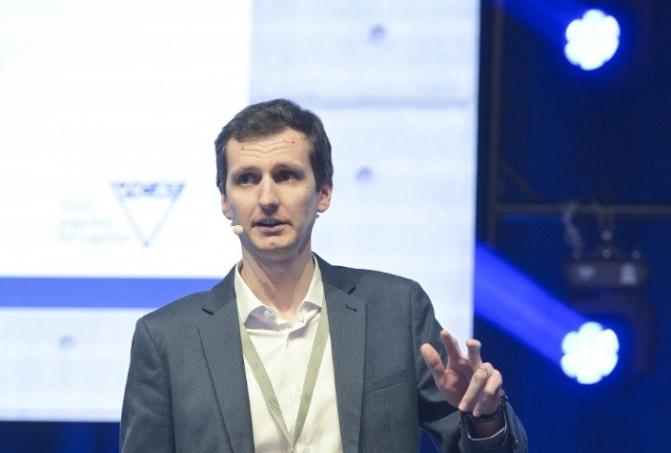
"Today, there is no magic solution to replace 100% of the clinker in cement. The best way to reduce CO₂ emissions from clinker is to partially substitute it with materials that are sufficiently available, reactive and effective in order to produce cements that are as good as, or better than those currently produced. One example of substituting clinker with activated clay is the Argilor project on the Xeuilley site. We will be able to produce cements with clinker rates close to 50%. Activated clays are emerging as the most significant breakthrough solution since the discovery of steel mill slag, the availability of which is declining, particularly in Europe." François Avet, Clinker reduction & SCM optimization expert
What is activated clay?
Activated clay is natural clay that is made reactive through heat treatment. This treatment involves heating the clay to around 800-850°C, well below the 1,450°C required to produce clinker.
This activation modifies the structure of the raw clay so that it can be used as a cement additive. The advantage of activated clay is two-fold:
The clay consumes less energy than clinker to activate its properties.
It does not generate chemical CO₂ during activation, unlike clinker; only the water that is naturally present in the clay is released.
Activated clay-based cements are therefore a forward-looking solution for reducing the clinker factor in the Group's cements. This additive is widely available, particularly effective, and its carbon footprint is four to five times lower than that of clinker. It also works extremely well with limestone filler, which further enhances its appeal.
Argilor Project: pioneer of industrial activated clay
Our "flash" clay activator project, operational since 2024 in Xeuilley, makes it possible to replace up to 50% of clinker with activated clay. What does it mean in numbers? 20% reduction in CO2 emissions while maintaining 100% of NF EN standard performance.
A project that has been in development for 10 years. Work began in autumn 2021 and commissioning took place in the first quarter of 2024. Our 90-meter-high installation activates local clays at 850°C in a cyclonic heat exchanger.
What does it mean in concrete terms? Less energy consumed for heating = less fuel burned = less CO₂ emitted. And as clay does not contain limestone, it does not release CO₂ through decarbonation. The savings are two-fold: energy AND process emissions.
Did you know ? Work carried out by Louis Vicat in the 19th century had already identified the reactive nature of activated clays and the importance of clay quality in obtaining optimal properties.
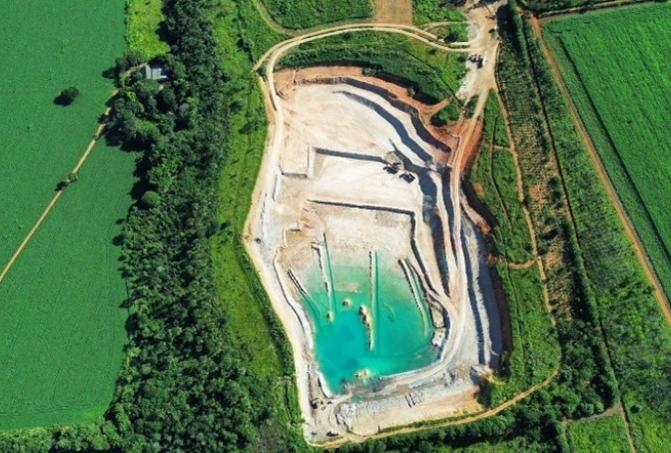
Ciplan's pioneering approach within the Group
In Brazil, Ciplan has taken another major step forward by producing activated clay in a kiln originally designed for clinker. We have adapted an existing kiln instead of building a new one. This adaptation is in addition to an existing line dedicated to the production of activated clay.
Our Ciplan engineers have produced cements containing less than 60% of clinker. This performance demonstrates that what once seemed unachievable is now reproducible on an industrial scale. Our ambitions have become operational standards, true to the pioneering spirit of Louis Vicat. This improvement is the result of 30 years of investments and innovations.
Vigier CEM Progresso: Swiss excellence
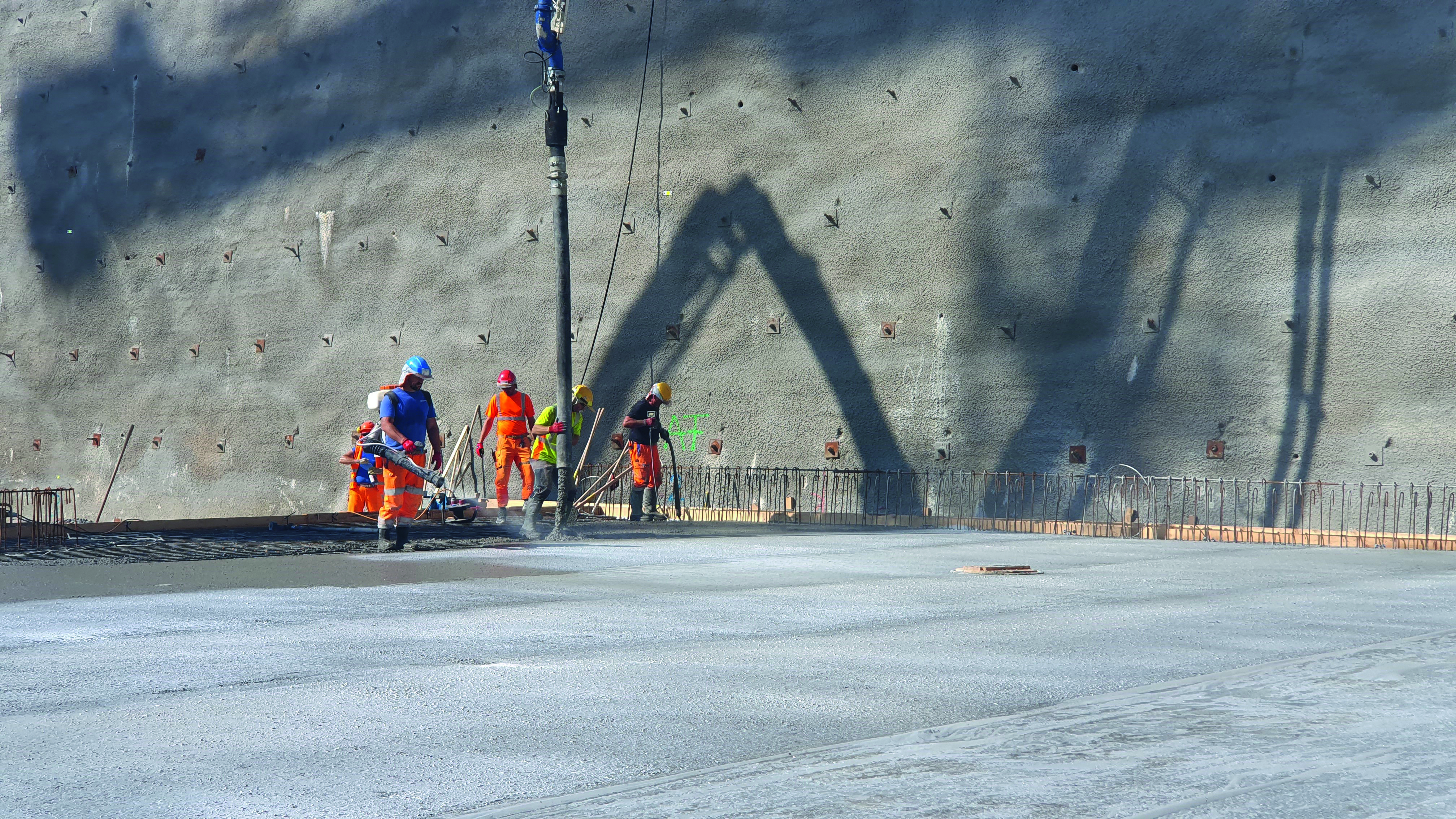
In Switzerland, our CEM Progresso contains more than 35% of secondary materials from regional sources. This low-clinker cement enables the production of concrete with less than 100 kg CO₂/m³, demonstrating the commercial viability of clinker substitution in demanding markets.
Cement additives used by Vicat: a sensible choice for decarbonized cements
The choice of a cement additive depends above all on local opportunities specific to each plant: there is no single solution that applies to the entire Group. The aim is to identify, site by site, the most efficient solution to reduce the clinker factor.
Several criteria come into play :
Availability of materials: to replace clinker, the additives must be sufficiently abundant and sustainable. Some, like fly ash or blast furnace slag, are very effective but available in limited quantities.
The carbon impact: the CO₂ footprint of additives like limestone filler or activated clays is much lower than that of clinker, making them particularly effective for decarbonizing cement.
Standards in force: standards already allow for significant use of cement additives in cement. However, innovation and constant developments in research are driving the gradual updating of these standards to include these innovations and increase their permitted content in cement.
Performance is an essential criterion: cements that contain less clinker must offer mechanical properties and durability equivalent to, or even superior to, traditional cements. These "blended" cements are already widely used within the Group and, in most of the countries in which Vicat operates, have the necessary authorizations to be marketed.
Fly ash now represents just 7% of global cement production, and blast furnace slag 8%. This is why our Group does not favor these cement additives as a means of producing low-carbon cement.
Reinventing cement: innovating to reduce clinker
The Group will continue to reduce the clinker factor, with a target set at 69% by 2030, thanks to a combination of several solutions.
Among these, activated clays will play a major role, whether they are activated thermally or mechanically, by high-energy grinding to make them reactive. In the longer term, by 2050, some international agencies estimate that cement formulations could include between 8 and 10% of activated clays on average worldwide. This means that clay cements, currently still perceived as innovative, will gradually become conventional cements and be widely deployed on the market, just like limestone cements or slag cements.

FAQ
Clinker is the essential hydraulic binder in cement: without it, there would be no high-quality cement that meets structural standards. Our aim is not to eliminate it, but to optimize it. Reducing the rate from 80% to 69% while maintaining 100% of NF EN standard performance is a technical revolution.
No. All of our activated clay-based cements comply fully with NF EN standards. Our 140 R&D engineers have rigorously tested Argilor for 10 years in laboratories and on pilot sites. The fact that CARAT was used for the 2024 Paris Olympics and ECOVISION in Switzerland on demanding sites is proof of its reliability. Our low-carbon products are not a compromise – they are innovations that equal or even exceed the performance of traditional cements.
Technically, yes. This record demonstrates that it is possible to achieve a very low rate. However, reproducibility depends on the local availability of complementary materials (pozzolans, slag, clays), regional standards and market acceptance. Our Group objective for 69% by 2030 is ambitious, but realistic, in line with our industrial capacities and our territorial resources.
Not necessarily. The cost depends on the complementary materials available locally. For example, activated clay or pozzolans can be extracted nearby, reducing logistics costs. Also, energy savings and regulatory incentives made these cements competitive. At Vicat, we are optimizing each formulation to ensure performance and accessibility.
Le clinker est un produit intermédiaire : un matériau cuit à environ 1 450 °C à partir de calcaire et d’argile. Le ciment est le produit fini, obtenu en broyant le clinker avec d’autres composants (filler calcaire, argiles activées, laitier…). Autrement dit, le clinker est contenu dans le ciment, mais le ciment ne se résume pas au clinker.
Le clinker reste un liant hydraulique de référence et permet de produire des ciments performants et résistants à l’échelle industrielles. Le groupe Vicat est engagé dans la réduction du taux de clinker de ses ciments par substitution avec des additions comme les argiles activées, le filler calcaire ou les pouzzolanes mais reste néanmoins vigilant à conserver les propriétés de ses produits